
What to do if you have a cold
How it works: Treating colds
To be able to completely fight colds, you need to treat all the symptoms of a cold. Home remedies and special medicines can help to get fit again faster. Because the sooner you treat a cold, the faster you will get rid of it.
How often do you catch a cold?
Our 7 tips: What to do if you have a cold?
Colds are annoying in everyday life and usually come when we can't use them at all. Before the interview, the first date, the wedding or the holiday. But: If you treat a cold in time, it does not have to spoil the beautiful moments.

You feel a slight scratching in the throat and the nose runs? Now you need to be quick and treat the cold directly. Take appropriate medicines directly as soon as you notice the first signs. These cause already at the beginning of the infection that the symptoms are not so serious. In this way, you align more than if the infection had already spread.

Finally take a deep breath again: Against runny nose, cough and a stuffy nose help medications that have a decongestant effect. Here, for example, nasal sprays, cold ointments or the inhalation of hot steam provide a remedy. Inhaling with essential oils is ideal to treat the symptoms, as it frees the snuff nose from stuck mucus.

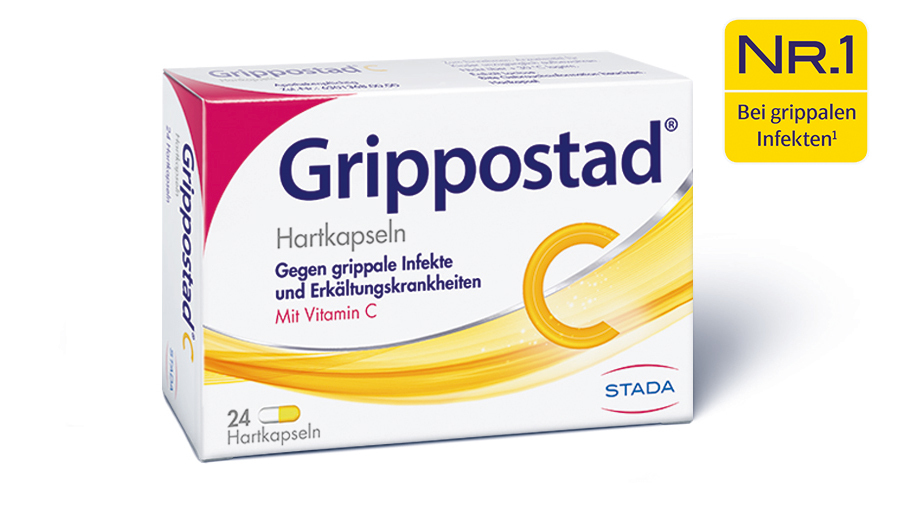
Vitamin C supports the normal functioning of the immune system. Vitamin C is also contained in Grippostad C hard capsules. This is important in the case of a flu-like infection, as the immune system is now particularly challenged. Grippostad Chard capsules are particularly suitable in the first days of a cold.

What would a flu infection be without a sore throat? You can treat these ailments of a cold by taking lozenges or gargling with antibacterial solutions. Ask your pharmacist for appropriate medicines to relieve the swelling of the mucous membranes and throat.

Not only the head and neck, but also the limbs hurt in a flu-like infection. So, what to do in case of a cold to also reduce the sensitivity to pain? There are medications that can also reduce pain as part of a cold.

During a cold, our organism runs into full swing. As a result, our body temperature rises, we sweat more and lose fluid. Now it becomes especially important to drink enough fluids to "flush" the viruses out of the body - be it through a warm soup or enough hot tea with honey. By the way: A delicious hot drink can also soothe the irritated mouth and throat.

Cold baths are also beneficial and can help you treat the common cold. Bath additives from essential oils contribute to the fact that the mucus dissolves and you can breathe freely again. Blood circulation is also stimulated, which makes it more difficult for the pathogens to settle in the mucous membranes. In addition, a cold bath has a relaxing effect. Most people find a water temperature of about 38 ° C particularly pleasant.
Home remedies or medication: what to do if you have a cold?
As a rule, you do not have to go to the doctor to treat a cold. Basically, you can fight any symptoms that occur yourself. In addition to medicines from the pharmacy, proven home remedies, such as:

Home remedies or medication: what to do if you have a cold?
As a rule, you do not have to go to the doctor to treat a cold. Basically, you can fight any symptoms that occur yourself. In addition to medicines from the pharmacy, proven home remedies, such as:
-
Eucalyptus oil balm for coughs
-
A hot bath for aching limbs
-
Calf wrap for fever
-
Calf wrap for fever
-
Inhale with chamomile for colds
-
Japanese medicinal plant oil for headaches
In addition, there are special combination products with which you can easily treat symptoms of a cold that occur at the same time. However, if the symptoms worsen or have not subsided after a few days, a visit to the doctor is inevitable.
Because a flu-like infection can unfortunately also develop into a secondary illness.
What should you do if you have a cold to avoid secondary diseases?
Treating a cold properly is important in order not to risk a secondary illness. Many sufferers are not aware that cold viruses can cause far more damage than just nasal congestion. With a protracted cold, serious complications threaten that can permanently damage the body. To prevent possible secondary diseases, you should:

Provide the body with sufficient rest and recovery throughout its duration.
Pay attention to whether you feel shortness of breath or palpitations even with little effort.
In case of long-lasting complaints, urgently consult a doctor.
How to treat and directly prevent a cold?
The nose is finally free again, the cough is released and the head no longer hurts. Once you have recovered from a cold, another infection is the last thing you want to think about.
What you should therefore not forget is that you can not only treat an acute cold, but also prevent a new infection. The following applies:
- When you have a cold, you like it warm and comfortable. But dry heating air in particular irritates our respiratory tract, making it the perfect place to go for cold viruses. Ventilate regularly or use additional water bowls on the heater to humidify the air.
- Do not start again immediately after the infection. Instead, it is better to enjoy another day of peace and quiet and only slowly become active again in sports.
- Regular and thorough hand washing, if not disinfecting, will also help to remove the last cold viruses.
- Continue to drink a lot: Even after the cold, the body needs enough fluids.
- As soon as you feel completely fit again, it is important to strengthen the immune system with sufficient exercise. Walks or sports do us good and get the immune system going again.

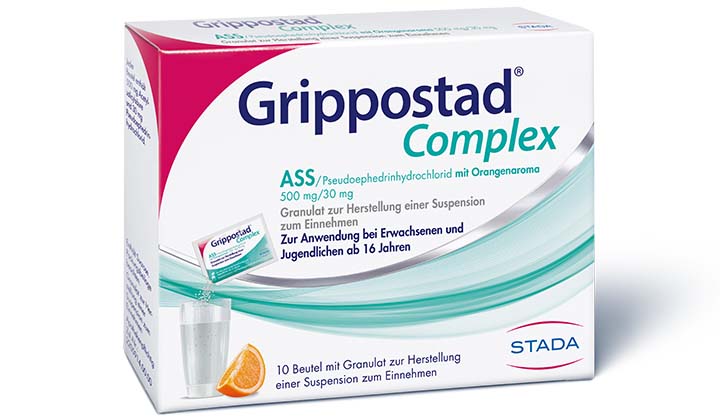
Grippostad® Complex
2er active ingredient combination for dissolving
Relieves cold-related pain and fever
Helps to free the head and nose
59% of doctors and pharmacists resort to medication
In addition, there are special combination preparationswith which you can easily treat simultaneously occurring symptoms of a cold. However, if the symptoms worsen or have still not subsided after a few days, a visit to the doctor is unavoidable. Because a flu-like infection can unfortunately also spread to a secondary disease.
150 doctors and 150 pharmacists/PTAs participated in the survey for the Grippostad cold facts1:

59% of them take medication when they want to "get rid of" a cold as quickly as possible. This applies to 70% of pharmacists/PTAs and to 47% of doctors.
Overall, one in two of the respondents relies on sufficient sleep.
39% try to drink enough.
Almost one in four people relies on vitamins and minerals, and only one in five on home remedies.
Only 8% can easily withstand cold symptoms.
On the other hand, 43% swear by medication to quickly feel better again. This is especially true for pharmacists, 60% of whom rely on medication to combat symptoms. In the case of doctors, it is only 33%.
1Online survey of 150 general practitioners, 75 pharmacists and 75 pharmaceutical technical assistants, conducted by DocCheck, survey period 12.07.2018-19.07.2018