
Cold: course & phases
Understanding the course of a cold
How long does the flu infection last at all and how exactly does a cold develop? The course and phases of a cold last about seven to ten days. Individual cold symptoms can even subside after several weeks.
The typical course of the disease can be divided into three cold phases:
- The incubation period
- The acute phase
- The late stage
How does a cold go? Phase 1: Incubation period
In the course of a cold, various complaints occur. But what happens when? In the initial incubation period of a cold, the number of viruses in the body is still low. Before the first symptoms become noticeable, our body's own defenses try to prevent the outbreak of the common cold. The immune system is already working at full speed. Even if we may not even feel the first cold symptoms. But as soon as we complain of an itchy nose or an unpleasant scratching in the throat, the typical cold course can no longer be stopped.
How does a cold go? Phase 2: Acute phase
From 1 to 3 days after infection, the cold slowly ramps up. The first signs are not long in coming in this cold phase:
- The neck scratches
- The head hurts slightly
- The nose runs
In addition, you start to shiver and feel tired and tired. Usually sneezing and head pressure round off the symptom package in the cold phase.
After 4 to 5 days, the course of the cold goes all out – all symptoms attract. Because the more the cold viruses multiply in the body, the more intensely we feel the symptoms. In this cold phase, the immune system is most challenged due to the numerous viruses in the organism.
The cold viruses have fought their way to the bronchi after 5 days in most cases. Common cold symptoms can be particularly pronounced in this cold phase. Scratching in the throat or a slight cough turns into an annoying irritable cough. And the runny nose is suddenly completely congested. Often in this phase of the cold we are additionally accompanied by increased temperature or even fever.
Typical symptoms at this time of the course of the cold are therefore:

Dry, irritating cough
Runny nose and a stuffy nose
Head pressure and pain
Pain in limbs and back
Sore Throat
Mild Fever
How does a cold go? Phase 3: Late stage
The late cold phase can range from 6 to 9 days. In this phase, the course of the common cold finally comes to an end, as the defense system has successfully fought the viruses. The symptoms gradually subside and the cold subsides.
Caution: About the course of the cold, we are often accompanied by cough. This can persist and only stop completely for some time after the remaining symptoms.
How long does a cold last for you?
How can you shorten the course of a cold?
Once you have been infected with a cold, it is hardly possible to prevent the spread of the viruses in the body. Seemingly unstoppable, the persistent cold viruses are penetrating our organism more and more. Nevertheless, careful treatment of cold symptoms not only improves well-being, but can also prevent secondary diseases.
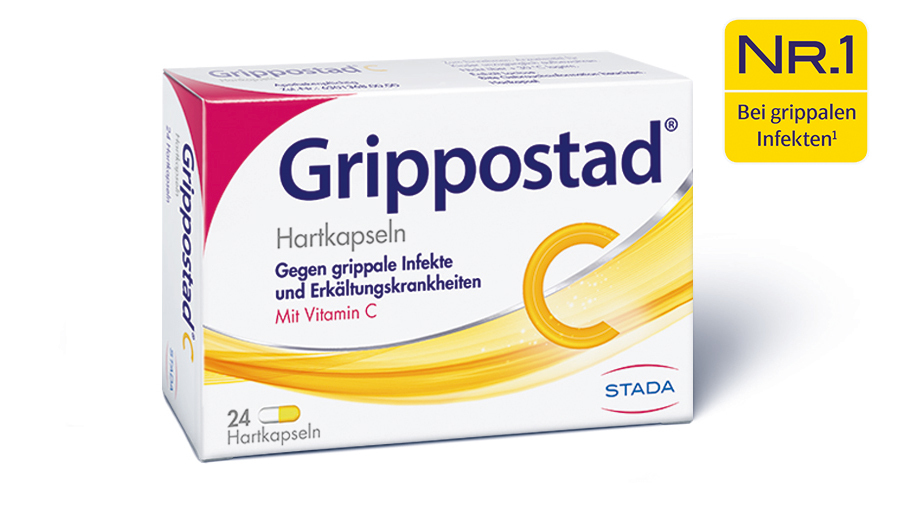
Take the duration of the cold course into your own hands with the right medications. Here, it depends primarily on the active ingredients contained. The proven 4-drug combination of Grippostad C can alleviate concurrent symptoms:
- The mucous membranes swell faster again.
- Irritable cough as well as headaches and body aches are relieved.
- Vitamin C supports the immune system.
How long the course of the cold lasts is influenced, among other things, by the state of health, the behavior of those affected during the cold phases and by complications that occur. For example, people with asthma or diabetes recover more slowly from a cold and immunocompromised people recover more slowly. Additional complications, such as a bacterial infection or a middle ear infection, can also prolong the phases of the cold.
Even if you are already slowly recovering from the symptoms of a cold, you want to spare your fellow human beings the same fate. This raises the question of in which cold phases the risk of infection is particularly high.
Already in the early course of the common cold, it is important not to underestimate your own infection potential. Because those affected can infect their fellow human beings even if they themselves do not notice any symptoms or even feel discomfort.
As long as one is contagious, closer contact with fellow human beings, especially those with a weak immune system, should be avoided. This is especially true during the incubation period and the acute phase. In these cold phases, you tend to sneeze a lot and spread the viruses through the air.
As the symptoms subside, the risk of infection decreases. But when exactly the symptoms subside varies from person to person affected – depending on age or immune state, for example. It is therefore not possible to determine in general how long there is a concrete potential for infection in the course of the cold. It is therefore important to protect yourself until you feel really fit.
When in the course of the cold should you go to the doctor?
If the cold is severe and/or the immune system is weak, it can get worse. The typical course of the common cold can develop into bronchitis, middle ear or pneumonia, especially during the acute phase.
There is no way around a visit to the doctor with these symptoms:

Shortness of breath or shortness of breath
Fever of over 39° C
Severe sore throat or earache
Persistent discomfort after two weeks
Cough longer than two weeks
In these cases, the symptoms can only be alleviated by targeted medical treatment and chronic secondary diseases prevented.
What do all stages of a cold have in common?
The typical cold course is curved: the symptoms of a cold begin slowly, reach their peak about the third day and then slowly decrease again. However, the immune system is challenged at all stages of the common cold. The typical course of the common cold can be prolonged at any time by additional complications. Symptoms and complaints can also worsen in each of the 3 cold phases and lead to secondary diseases. This means that you should take care of yourself during the entire course of the cold so that the flu-like infection can heal completely.
In addition, there is a continuous potential for infection at all stages of the common cold, regardless of whether and how strongly you feel the symptoms. Accordingly, you should continue to be careful not only during the cold, but also a few days after. This ensures that you do not infect your fellow human beings, completely cure the cold and your immune system can regenerate.

Grippostad® C Hartkapseln
4er active ingredient combination for cold complaints
Fast, strong and well tolerated
Easy to swallow, convenient to take away
1IQVIA Pharmatrend MAT08/2020