
Cold does not go away
What is a delayed cold?
After a week, it is usually over: fever, headache,cough, sore throat – normally a cold has subsided without complications. But if we do not give our body the necessary rest, the following can happen: The cold does not go away and the risk increases that you now have to cure a delayed cold. What is important in the case of a delayed cold and what consequences this can have for your health, read here.
After how many days do you speak of a dragged on cold?
What is a delayed cold?
If the symptoms last longer than ten days, this is often an indication of a delayed cold. Symptomssuch as body aches, sore throats and fatigue continue to rob you of energy: the cold does not go away. If the cold symptoms have intensified, this indicates a delayed flu infection. Accordingly, a delayed cold is determined by duration, intensity and handling of the infection.
For example, if you do not cure yourself properly, an additional bacterial infection is not uncommon. Since the mucous membranes are already weakened by the viruses, they are more susceptible to such a so-called superinfection.

Take your illness condition seriously: Because a delayed cold offers a great risk for the resulting secondary diseases. Without treatment, the pathogens can spread further in the body and have fatal consequences for your health.
In any case, we advise you to consult a doctor. He will discuss with you the further procedure and how you should treat the delayed cold.
In general, always ensure adequate hydration and a healthy and balanced lifestyle to strengthen and keep your immune system stable. Eat a vitamin-rich diet and pay attention to enough exercise to prevent the next cold.
Delayed cold: consequences
If the signs of a cold are ignored and it develops into a delayed cold, this may be followed by other complaints or secondary diseases with which your body has to struggle. A delayed cold can trigger, among other things, various secondary diseases:
- Bronchitis
- Myocarditis
- Meningitis
- Pneumonia
- Sinusitis
- Superinfection (additional bacterial infection)
Cure a dragged-out cold
In order to get rid of the annoying complaints and to avoid worse, one thing applies above all: Cure the delayed cold.
Please avoid taking the delayed cold with you to work. Also sport for colds is not recommended. So that the delayed cold is not permanent, you should be patient and support the healing process: This is possible with rest and relaxation instead of clocked everyday life.

Especially with fever, bed rest applies, which should be strictly adhered to. The body then works at full speed to get rid of the viruses. You should then not strain your body even more.
Inhalations with warm vapors and the addition of essential oils help to dissolve the mucus as well as moisturize the respiratory tract. Gargling with water and salt several times a day is also recommended to nourish the throat and throat and thus protect against inflammation. After coughing up, herbal teas with anise or fennel can calm the throat again.
In general, you should always ensure adequate fluid intake and a healthy and balanced lifestyle in order to strengthen your immune system and keep it stable. Eat a diet rich in vitamins and make sure you get enough exercise to prevent the next cold.

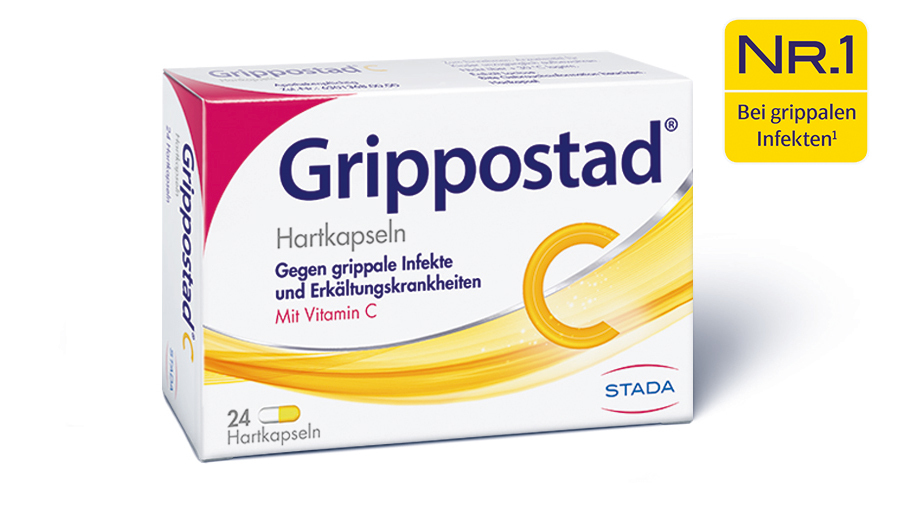
Grippostad® C Hard Capsules
4er active ingredient combination for cold complaints
Fast, strong and well tolerated
Easy to swallow and convenient to take away
1IQVIA Pharmatrend MAT08/2020
A cold affects doctors and pharmacists in everyday life
Have you always wondered how a cold affects doctors and pharmacists in their private lives? Our survey shows: The majority of the free time is not spoiled by annoying cold symptoms – only sports activities are taboo for the duration of the cold for most.
150 doctors and 150 pharmacists/PTAs participated in the survey for the Grippostad cold facts1:

71% do not want to be dictated by a cold how they have to spend their free time. Although they refrain from physical exertion and sports activities when they have a cold, they otherwise continue to live normally.
A total of 8% of those surveyed even state that they do not let themselves be influenced by a cold at all in their private lives and continue to live normally.
For pharmacists, the renunciation of physical activity is particularly important. A full 83% said they consciously give their body a break while fighting pathogens.
9%, on the other hand, take cold symptoms so seriously that they put private obligations completely on hold and guard the bed until the symptoms subside.
Doctors and pharmacists largely agree on one point: A full 59% resort to medication to quickly feel better again.
1Online survey of 150 general practitioners, 75 pharmacists and 75 pharmaceutical technical assistants, conducted by DocCheck, survey period 12.07.2018-19.07.2018