

Baby Skincare Guide: New-born Dry Skin, Nappy Rash & Eczema
As a parent, there’s nothing more special than nuzzling into your baby’s amazingly soft skin. Yet protecting and caring for your baby’s delicate skin can sometimes be tricky, because as beautiful as it is, it’s also super sensitive!
For any first-time or expecting parents, we’ve put together our expert baby skincare tips, including how to protect against new-born dry skin, eczema, nappy rash, scratches and the sun.
The importance of new-born baby skincare
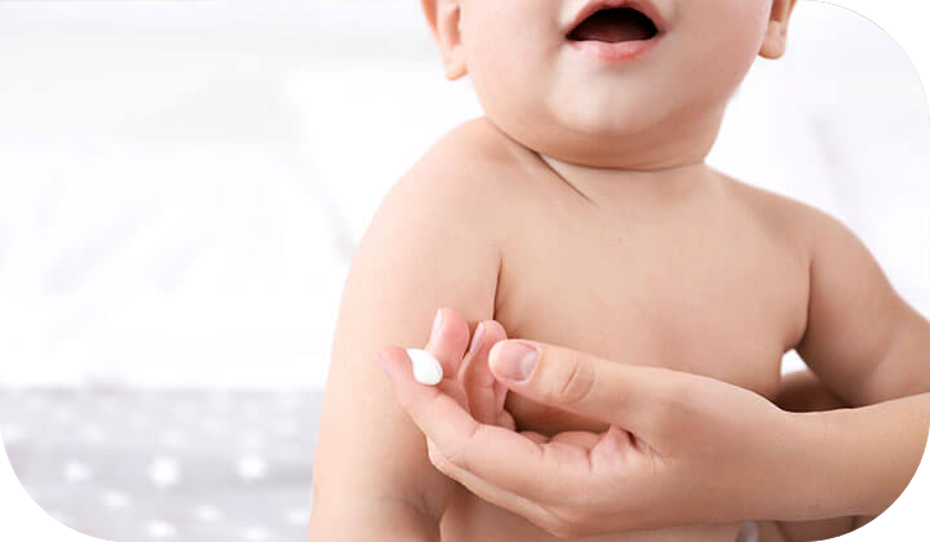
Your baby’s skin provides an essential barrier, not only protecting them from the heat and cold, but also from harmful bacteria and other germs that can cause skin conditions.
One thing you may not know, is that your baby’s skin is still developing! The development of your baby’s skin begins in your womb and doesn't finish until at least a year after birth. Studies show that a baby’s skin can be 30% thinner than an adult's, which is one of the reasons it is often much more sensitive.
Having sensitive skin can mean they react to products such as washing detergent and soaps, as well as develop common skin conditions. Fortunately, most skin conditions clear up without treatment, though there are a few ways for you to help reduce irritation and protect your baby’s skin.
New-born dry skin
New-born baby dry skin is a common worry for parents, but you shouldn’t be concerned by peeling or flaking in the first few days or months after birth - it’s completely normal and it can be easily resolved with a few tips.
What can you put on new-born dry skin?
Over the first month, your baby’s skin will develop its own natural protective barrier. We recommend that you wash your baby with plain water and by month two, you can start to introduce mild products that are suitable for babies. You should avoid using sulphates, parabens, phthalates, artificial colours and perfumes to prevent dry skin on your new-born’s face and neck. If you’re unsure what to put on your baby’s flaky skin, you can always speak with a pharmacist or your health visitor.
Any cleansing and moisturising products you choose for your baby once they are a little older should be gentle and developed especially for babies. Sticking with the same products will also ensure that your baby’s skin doesn’t have to adjust to different ingredients.
New-born eczema
Many babies also suffer from eczema; in fact, one in five children in the UK has eczema. So, what causes eczema in babies? Researchers aren’t entirely sure what causes it, but it’s likely thought to be a mixture of genetic and environmental factors. Eczema refers to a number of inflammatory skin conditions, such as scalp eczema (also called cradle cap), dermatitis and dyshidrotic eczema. New-born eczema is characterised by a red rash that makes the skin dry and itchy. This rash may have lumps and ooze fluid.
How to treat baby eczema
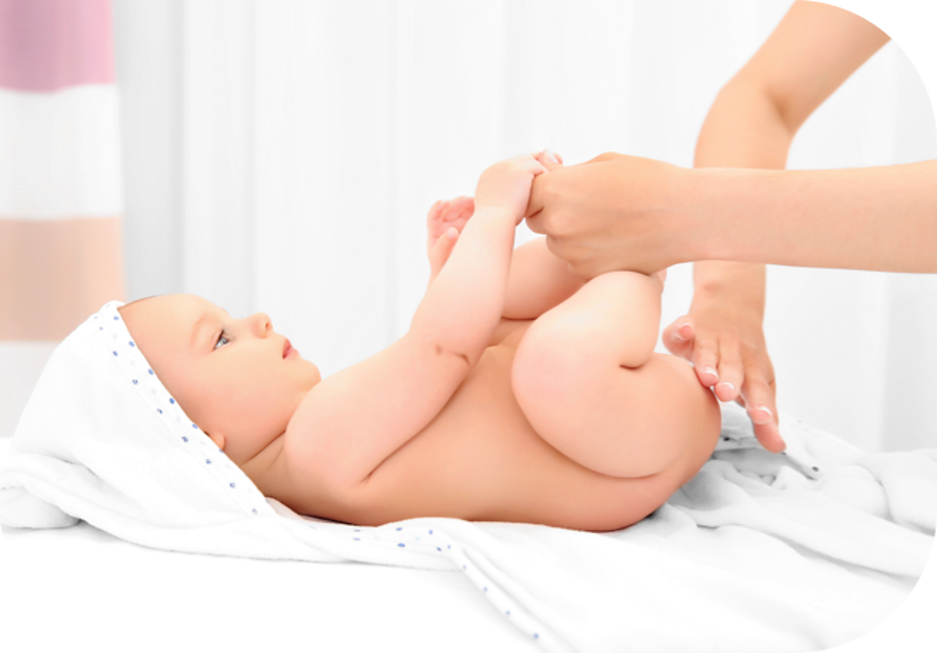
Often, new-born eczema will go away on its own, but if you’re struggling to get rid of it there are a few treatments you can try, such as:
- Avoid hot baths as these can further irritate the skin - instead keep them lukewarm
- Moisturise your baby frequently after bathing with fragrance-free lotions formulated for sensitive skin
- Avoid using any irritants like wool clothing, perfumes and scented body soaps
- Pat your baby’s skin dry gently instead of rubbing it
- Dress your little one in soft loose-fitting clothes to minimise irritation
If eczema persists, your doctor may also recommend topical baby eczema creams such as corticosteroids, antihistamines and antibiotics.
New-born nappy rash
Nappy rash is common in babies and typically happens when the delicate skin around your baby’s nappy area becomes irritated. It can be a really hard time for both you and your baby - so to avoid that ‘oh no’ moment, take steps to prevent it, rather than waiting to treat.
Our top tips to prevent baby nappy rash and irritation are to change nappies as frequently as possible, and always use a barrier cream! Mitosyl Protective Ointment can be used at every nappy change to help prevent nappy rash as it’s been specifically formulated relieve irritation and redness.
For more information on how to help nappy rash, read our comprehensive guide to nappy rash and the seven triggers.
Best washing powder for babies
Between baby sick and nappy disasters, as a parent, there is a constant cycle of laundry on the go! So, it’s important to find the best washing detergent that will clean baby’s clothes without irritating their skin.
When it comes to washing your little one’s clothes, look for a non-bio detergent that will get rid of those messy food stains. Using a fabric softener that has hypoallergenic properties will also make their clothes soft and help to reduce the risk of irritation on your baby’s skin.
A top tip from us would be to choose clothes that are made from natural fibres such as cotton and linen, which let the skin breathe. Although knitted cardigans and jumpers can look cute, it’s important to remember that wool can irritate already sensitive skin. So, when you’re planning your baby’s winter wardrobe, it’s best to put on a cotton vest underneath any woolly knitwear.
Protect your baby’s skin from scratches
Although your baby’s nails may be softer than yours, they are still sharp enough to scratch and they grow surprisingly fast! When it’s time to give your baby a manicure, you can either use an emery board or special baby scissors with rounded tips. Lots of parents find it’s easier to trim their baby’s nails when they are sleeping, so they aren’t wriggling!
To avoid clipping too close to their fingertip, hold your baby's finger, press the fingertip pad down and away from the nail. Their toenails grow more slowly and will require less maintenance!
Call your healthcare provider if the skin around the toenails gets red, inflamed or hard.
Baby sun protection
Can babies wear sunscreen? Babies’ skin is so sensitive that it’s best to shield them entirely from the sun rather than use baby sun cream for the first six months. It’s particularly important to avoid direct exposure when the sun is at its highest intensity, between 10am to 4pm.
When your baby is at least six months old, you can protect their skin by applying sunscreen with a high SPF, like SPF50. Make sure to apply sunscreen 30 minutes before going out and reapply it frequently if you take your baby into the pool, or if he or she is sweating!
Top tip: Try applying the sun cream to your child’s wrist prior to use to test for irritation with certain formulas.
We hope this article helped you learn more about baby skincare, including protecting against dry skin, eczema, nappy rash, scratches and the sun. Do you have any other questions about nappy rash? What tips would you like to hear from us? Let us know on Instagram or Facebook. To keep your baby happy and healthy, check out our range of specially-formulated Mitosyl products.


