



ViruProtect - for acute risk of infection and at the first symptoms of a cold
ViruProtect is an innovative spray based on glycerin and the natural enzyme trypsin, which covers the mucous membrane and deactivates various cold viruses.
Scientific studies have shown that ViruProtect can:
- reduce the duration of a cold by up to 3 days
- reduce the number of cold viruses by more than 90%
- stops viruses from multiplying
Glycerol and Trypsin- the perfect match
The natural enzyme trypsin, found in Atlantic cod, is actually a digestive enzyme.
However, it also causes the breakdown of viral proteins.
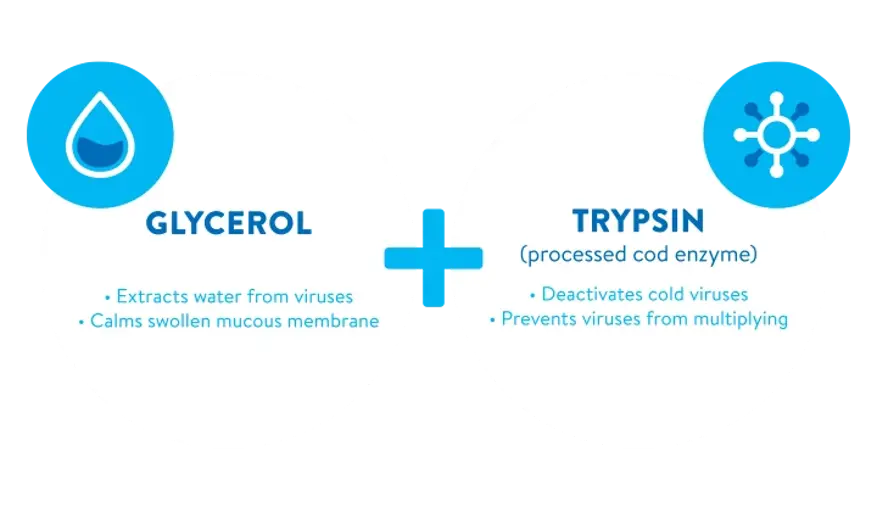
How ViruProtect works:

Glycerol creates an osmotically active barrier that traps viruses.

Trypsin inhabits the viruses´ability to bond with the mucous membrane and thus inhibits their ability to infect cells.

The ViruProtect barrier protects the oral cavity and throat, allowing the body to get rid of deactivated viruses using its natural process.
Do you know the risk?
In certain situations, there is a greater risk of contamination than usual. At those moments you can protect yourself extra. With the fist signs of infection use ViruProtect to stop viruses from multiplying!

If you take public transport when going to , you are more likely to come into contact with people who may have a viral infection.

If there is someone sick within the family, it happens quite often that the entire family also gets sick.

At work or school, a lot of people come together in small spaces. In this case it may also be appropriate to take steps to protect yourself.

Engaging in public activities like visiting bars, restaurants or big events where people closely interact with others, the interaction is longer, and usually indoors all that increase the risk of infection.

ViruProtect- deactivates various viruses²
On the one hand, ViruProtect deactivates various cold viruses and on the other hand, it prevents them from multiplying and therefore can reduce the duration of a cold¹²³.
Sources:
¹Clarsund et al (2017) Open Journal of Respiratory Diseases, 7, 125-135 / ²Stefansson et al (2017) Virol Res Rev, Volume 1(5): 1-3 / ³Davison et al. (2020) Eur J Sport Sci, Jun 30; 1-10 /4Gudmundsdottir et al. (2020) J Med Virol, doi: 10.1002/jmv.26554*tested on Rhino-Virus 16, - *in-vitro test