STADA Sets Stage at Key Biosimilars Event
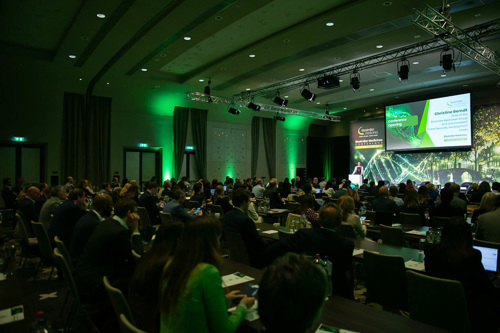
STADA‘s Dr Christine Berndt, Vice President Global Specialty Development and Chair of Medicines for Europe’s Biosimilar Medicines Sector Group, outlined the opportunities and challenges for Europe‘s biosimilars sector during the opening speech to around 250 delegates at Medicines for Europe‘s Biosimilar Medicines (BIOS26) Conference held in Amsterdam, the Netherlands, on 7–8 May.
Addressing physicians, hospital pharmacists, payers, regulators, policy makers, patient groups, as well as STADA‘s existing and potential biosimilar development and manufacturing partners, Christine highlighted the significant progress made across the biosimilars sector over the past two decades.


20 Years of Biosimilars: Supporting Access and Sustainable Healthcare
Speaking 20 years after the approval and launch of the world‘s first biosimilar, somatropin, she pointed out that almost 10 billion patient treatment days had proven biosimilars‘ safety, efficacy and quality to be equivalent to the reference medicines. In categories such as anti-inflammatory anti-TNFs such as adalimumab, infliximab and golimumab, biosimilar competition had doubled patient access in the 10 years following market entry. And in total, biosimilars had saved Europe‘s healthcare systems more than €75 billion* so far.
But for Europe to maintain its leadership on biosimilars and continue to serve patients, STADA‘s VP Global Specialty Development, emphasized to the audience, the EU needed to act decisively – not least by passing an effective EU Biotech Act that would strengthen Europe‘s industrial and supply resistance and lead to better outcomes for patients.
To shape sustainable access to the next generation of biosimilars – more than 100 molecules, representing over €50 billion in sales, are set to lose exclusivity by 2032 – market policies would need to go beyond economic metrics to prioritise patient outcomes, Christine shared with the audience.
Improving pricing and procurement practices and leveraging the efficiencies gained through biosimilar use, healthcare systems must implement structured triggers for the evolution of treatment paradigms, care pathways, including biosimilar-first policies, and reinvestment strategies, ensuring that freed-up budgets are redirected to enhance patient services and products, and delivery of care.
Modernizing regulatory frameworks
She also touched on opportunities to modernise regulatory frameworks, especially by waiving the need for costly comparative studies in patients based on highly sensitive analytics that could prove biosimilars had no significant differences to the reference product. This could cut development costs, thereby addressing the ‚biosimilars void‘ whereby only around one in three potential biosimilars are currently known to be in development.
Christine cautioned against plans in the Biotech Act to extend exclusivity for original biologics by 12 months, as this would put additional burdens on stretched health budgets and delay patient access. Rather, she argued:
Policymakers should use their unique opportunity to encourage investment in manufacturing technologies and resilient supply chains via dedicated funding for strategic biosimilar projects.
Unlocking Europe’s Biosimilar Advantage
Looking ahead to the next wave of biosimilar medicines on the horizon, Christine summarized that industry‘s mission is clear: continuing to transform how it delivers care. By simplifying regulations, reforming procurement, enhancing market competition, and investing in the European biotech ecosystem, companies could ensure that the 'Biosimilar Advantage' continues to deliver unparalleled access, economic resilience, and better health outcomes for every European patient.